How receipts work
A receipt is not a badge. It's the save history.
Every time an artist saves their project, the receipts.audio agent captures it: the file, the timestamp, what changed. Tracks added. Tempo moved. A bridge built on Tuesday, cut on Friday. Months of that.
The receipt you see is that history, compressed: hours, sessions, range, rework — drawn from the real saves, nothing else.
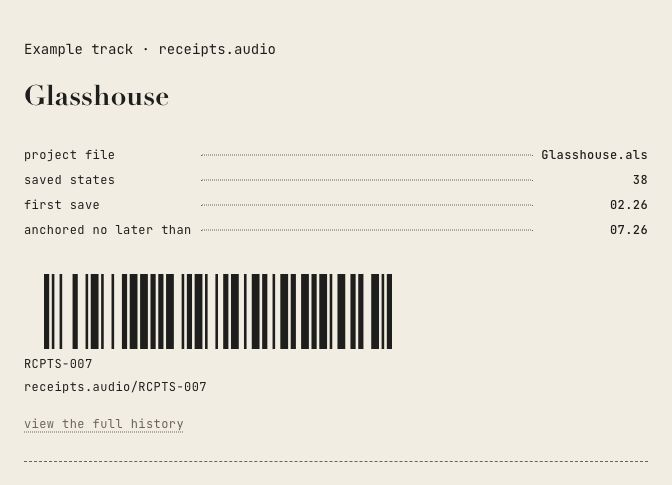
What a receipt proves
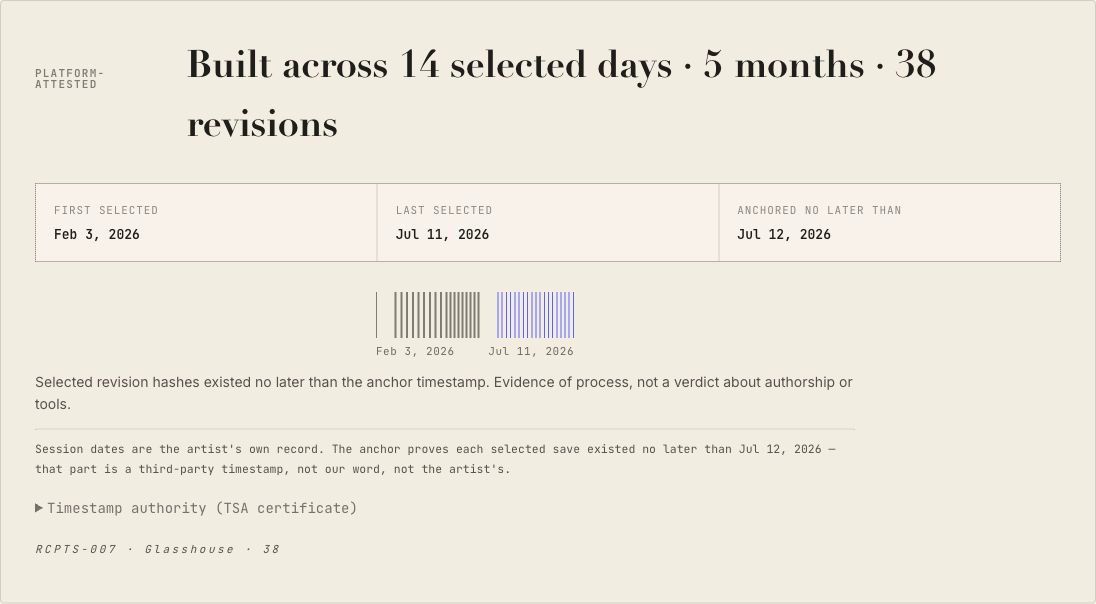
- The files existed. Each captured save is anchored with an independent timestamp service. An anchor means: this exact file existed no later than that date. That part is cryptographic — a third-party timestamp, not our word, not the artist's.
- The work was incremental. A song that was built shows its building: saves that differ a little, session after session, including the dead ends. The receipt's figures come from that chain.
- It happened in these accounts, on this timeline. Sessions, saves, and dates, as captured.
What a receipt doesn't prove
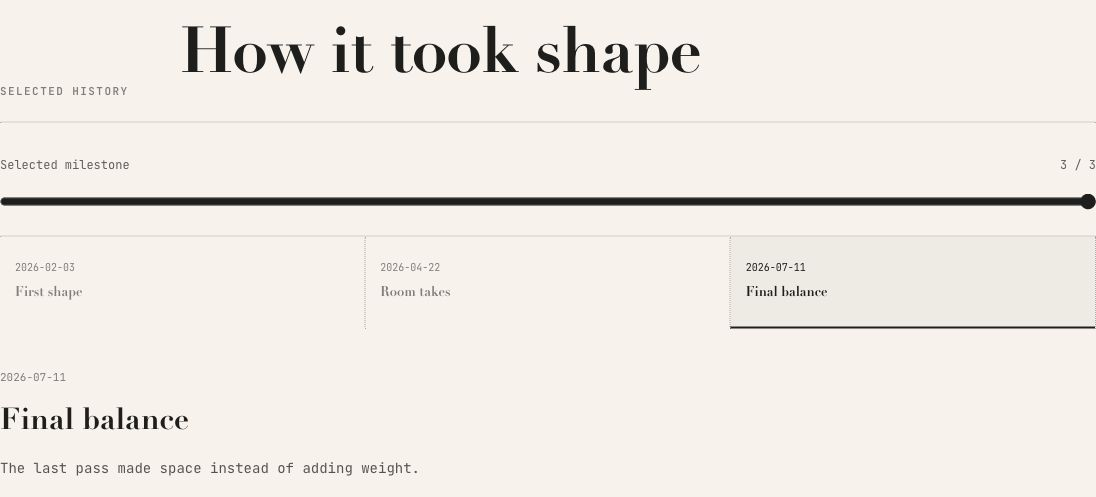
We'd rather you hear the limits from us.
- History before capture began is the artist's own record. When an artist imports past work, those dates come from their project files and are labeled as the artist's record on every surface. The anchor guarantee — "existed no later than" — starts the day capture starts. Our first published receipt carries this label too. From capture onward, every save is anchored.
- A receipt shows the making, not the credits. Who did what inside a session — that's between the artist and their collaborators, same as it's always been.
- A receipt is not a tool report. It doesn't inventory what was inside the sessions, and we don't scan or judge anyone's music. That's not a gap. It's the point: we show work, we don't police it.
- A receipt covers the range it names. Artists choose what to publish. What they publish is real.
Could someone fake one?
Not cheaply — and that's the whole idea.
To fake a receipt going forward you'd have to actually do the work: rebuild a track save by save, session by session, in real time, for weeks — because anchors can't be backdated. A lie that costs weeks of skilled labor per track isn't a loophole. It's a price. Locks don't make theft impossible; they make it expensive. Receipts does that for the paper trail.
The fine print, in plain type
Evidence of process, not a verdict about authorship or tools. Anchored no later than the date on the anchor. Artist's record where it says artist's record. Powered by Tribe Records.